

Rochester Low Voltage Pros: Structured Cabling & Low Voltage Contractor
Rochester Low Voltage Pros installs structured cabling and low voltage wiring for commercial buildings. We handle Cat6 and Cat6A station cable, fiber backbone, access-control door wiring, and voice pairs. Rough-in lands before drywall, and finish work and testing happen after the other trades are out of the ceiling.
A free site walk and a written scope come before anyone pulls cable. Drop count, closet layout, pathway, and cable type are called out on that walk. Warehouse runs near copper's 100-meter limit are part of how we plan the closet.
Get Your Free Estimate
We will get back to you within one business day.
Why Rochester Low Voltage Pros Is Rochester's Low Voltage Contractor
- Locally owned
A local low voltage shop for commercial buildings.
- Labeled & tested drops
Every drop is tested and labeled to its patch panel port, so the next tech can read the closet.
- Free estimates
Site walk and drop count before the quote.
- Offices, clinics, warehouses
Tenant build-outs, clinic remodels, and warehouse runs.
- Clean closet handoff
Labeled patch field and as-builts at turnover.
- Works with your other trades
We coordinate with the GC and the IT contractor already on the job.
Commercial Structured Cabling & Low Voltage

Structured Cabling Installation
Station cable runs from the work area outlet back to the patch panel, in cable tray or on J-hooks above the ceiling. IDF and MDF closets get racks, patch panels, and vertical cable management. Every drop is tested and labeled, and you get as-built drawings at handoff. If a camera contractor is on the job, pathway can be left for their runs.

Fiber Optic Installation
Fiber backbone between floors, closets, and buildings, plus horizontal fiber past copper's 100-meter channel limit. Single-mode handles long runs between buildings. Multimode handles shorter runs inside one. Strands get fusion spliced or connectorized in rack-mount enclosures, then tested so loss is documented.
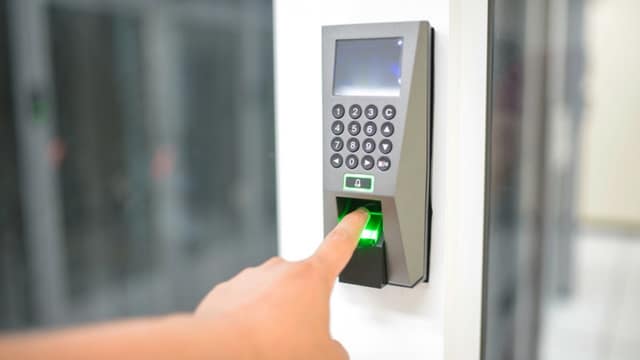
Access Control Installation
Reader cable, electric strikes and maglocks, request-to-exit sensors, door position switches, and the low voltage power supplies that run them. Composite access control cable keeps each door to one pull, landed and labeled at the panel so your access vendor can bring the system online.
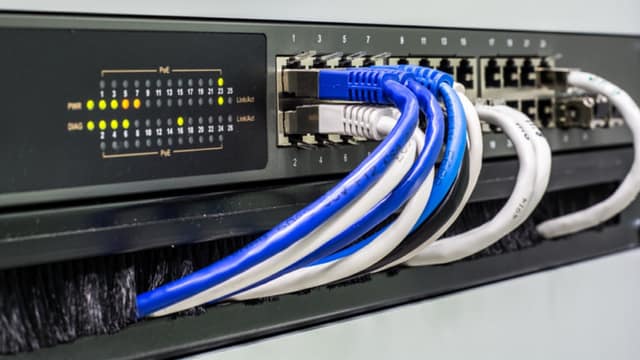
Voice & Data Cabling
Data and voice drops to desks, phones, printers, and wireless access points, landed on patch panels in the closet. Moves, adds, and changes after move-in get the same testing and labels as the original install.
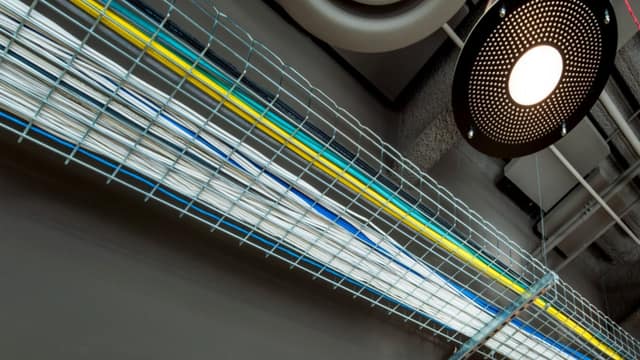
Low Voltage Wiring
Tenant improvements and new construction, roughed in before drywall and finished after. Plenum-rated (CMP) cable goes above return-air ceilings, riser-rated (CMR) goes in vertical shafts, and penetrations through rated walls get firestopped.
Structured Cabling for Offices, Clinics & Warehouses
Office Structured Cabling
Suite build-outs follow the furniture plan, so drops land at actual workstations instead of guesses off the floor plan. Conference rooms, printers, and wireless access points each get a home run to the closet. Work can run after hours when the rest of the floor has to stay open.
Clinic Structured Cabling
Exam rooms, nurse stations, check-in desks, and lab or imaging equipment get data drops on clinic remodels. Work is scheduled around patient hours, with ceiling tiles back in place before the next day starts.
Warehouse & Campus Structured Cabling
Long runs, IDF closets, and fiber laterals between buildings. Warehouse drops often sit near copper's 100-meter limit, so a second closet or a fiber link gets planned early. Wireless access points mount high on racking for scanner coverage.
Types of Structured Cabling
Cat6 & Cat6A Cable
Cat6 handles most office drops. Cat6A supports 10-gig speeds over the full 100-meter channel, which makes it the usual pick for wireless access points and new builds. Both get tested and labeled before handoff.
Fiber Backbone Cable
Single-mode for runs between buildings and long risers. Multimode (OM3 or OM4) for shorter runs inside one building. Terminated in rack-mount enclosures and loss tested end to end.
Copper Voice Cabling
Voice pairs and cross-connect for station and closet work, landed on 110 blocks or patch panels. Analog lines still serve fire alarm panels, elevator phones, and older phone systems.
How Much Does Structured Cabling Cost in Rochester, Minnesota?
Structured cabling cost comes down to the job. Drop count, cable type (Cat6, Cat6A, or fiber), ceiling type, and run length to the closet drive the number.
Closets that need racks and patch panels, and after-hours work, add time. Open ceilings in new construction pull faster than hard lids or occupied suites. Call to walk through drop count and closet layout.
What to Expect When You Hire a Low Voltage Contractor
- 1Site walk
Walk the suite or building, count drops, and mark closet locations before anything gets pulled.
- 2Pathway plan
Tray, J-hook, and conduit routes get laid out along with the IDF or MDF, so every cable has a clear path and a clean landing.
- 3Cable install
Station cable, backbone, and door wiring go in per the plan, on a schedule the floor can live with.
- 4Test & label
Each drop is tested, certified to the agreed standard, and labeled so the next tech can read the patch field.
- 5As-built drawings
You get as-builts, test results, and a labeled patch field.
- 6Vendor coordination
If a camera or access vendor is already on the job, name them on the walk-through so pathways line up.
Structured Cabling Photos
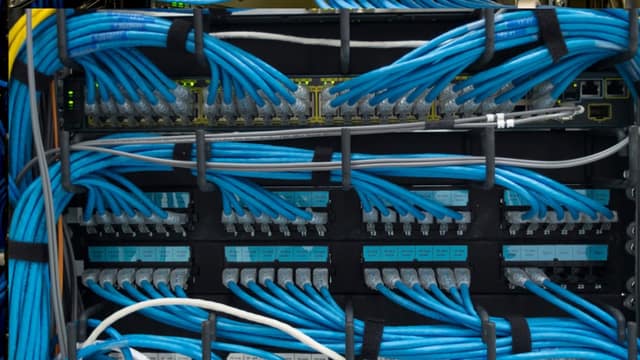
Finished low voltage closet with labeled patch field

Organized cable management inside a network rack
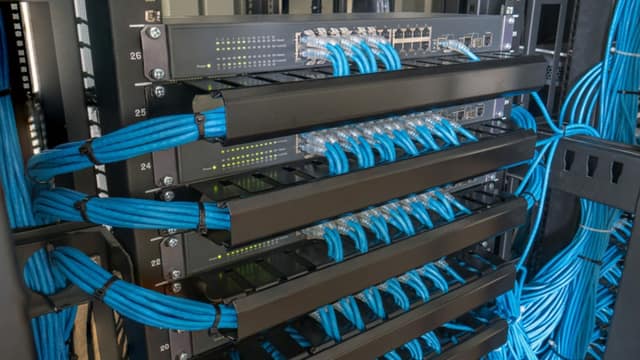
Structured cabling rack with tidy vertical managers
Low Voltage Contractor in Byron, Kasson, Stewartville & Pine Island
Rochester Low Voltage Pros works out of Rochester, MN, and takes commercial cabling jobs in Byron, Kasson, Stewartville, Pine Island, and throughout Southeast Minnesota.
- Rochester, MN
- Byron, MN
- Kasson, MN
- Stewartville, MN
- Pine Island, MN
Structured Cabling & Low Voltage FAQs
Do you install security cameras or CCTV?
No. We pull cable and pathways and work with the camera contractor already on the job. We also have trusted contractors we can recommend.
Are you an electrician?
No. Power panels stay with the electrician. This is structured cabling and low voltage work.
Do you sell internet or phone service?
No. We install the cable plant. Carriers and IT shops own internet, hosted phone, and monitoring.
Do you install fiber, or only copper?
Yes. Backbone fiber is its own scope. Station cable stays copper unless the spec calls for fiber.
Do you wire nurse call?
Only when nurse-call pathway is on the drawings. Clinic exam rooms and nurse stations are the usual drops.
Will you coordinate with an access or security vendor?
Yes. Name them on the walk-through so door pathways and pulls land where that vendor expects.
Can you work after hours?
Yes. Occupied offices and clinics often get cabled evenings or weekends so the floor stays open. The schedule gets set on the site walk.
Get a Structured Cabling Estimate in Rochester
Tell us about the building, the drop count, and the closet layout. We will send a free structured cabling estimate.